Make glucoamylases your ally in productive processes of carbohydrate conversion.
Glucoamylase in the food industry
The use of glucoamylase has become widespread in the food industry due to its ability to generate glucose from starch-rich plant sources. Its application allows for adjusting sweetness profiles, improving fermentation, and transforming low-value raw materials into more useful and functional products. Its main uses include:
Production of glucose syrups
One of the most common applications of glucoamylase is in the manufacture of high-glucose syrups. These syrups are made from corn, wheat, or potato starch and are used as sweeteners in beverages, baked goods, preserves, ice cream, and other processed foods.
Fermented beverages
In the brewing industry and in the production of fermented grain-based beverages, glucoamylase is used to increase the amount of fermentable sugars in the wort. This allows:
- Increase the alcoholic strength without adding external sugars.
- To better control the fermentation and the organoleptic profile of the product.
- Reduce non-fermentable waste, optimizing overall performance.
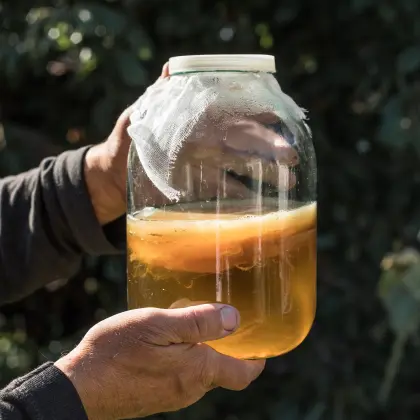
Fermented non-alcoholic beverages
Glucoamylase is also used in the production of fermented non-alcoholic beverages, such as kombucha and rice ferments, to modulate the natural sweetness of the base ingredients. In this context, it’s worth noting that glucoamylase allows sugars to be generated naturally, without the need to add them to the product for sweetness, resulting in a cleaner food that aligns with current consumer trends.

Improved taste and texture
In some baked or processed products, glucoamylase is incorporated to release simple sugars that not only provide sweetness but also influence the Maillard reaction, generating more intense aromas and colors. Furthermore, modifying the starch matrix can improve the final texture of the food.
What is glucoamylase and what is it used for?
Glucoamylase, or amyloglucosidase, is a hydrolytic enzyme that catalyzes the release of glucose units from polysaccharides such as dextrins and maltose. It acts by breaking α-1,4 and, to a lesser extent, α-1,6 glycosidic bonds at the non-reducing ends of these chains.
Its main function is to transform dextrins into free glucose, making it a key component in the production of glucose syrups, fermented beverages, baked goods, and in improving the flavor or texture profile of various foods. It is also important in sectors such as bioethanol and animal feed, where the efficiency of carbohydrate conversion has a direct impact on process productivity.
Characteristics of glucoamylase / amyloglucosidase
Glucoamylase is characterized by a number of properties that make it especially versatile and effective in industrial applications:
Stable enzymatic activity
It generally works effectively at temperatures between 55–65 °C and a slightly acidic pH, which facilitates its integration into various processes without the need for extreme conditions.
High enzyme performance
It is capable of generating a high concentration of glucose in short periods, optimizing production times and energy efficiency.
Compatibility with other enzymes
Glucoamylase is often used in conjunction with α-amylases for complete starch conversion, allowing the design of sequential or combined enzymatic processes.
Sustainable enzyme use
By allowing more efficient processing at lower temperatures, it contributes to reducing energy consumption and minimizing the use of additional chemicals.
These characteristics make glucoamylase an essential enzyme in the design of advanced food processes that seek efficiency, performance and naturalness.
How does glucoamylase play a role in bioethanol production?
Outside of the strictly food sector, glucoamylase is used in the production of bioethanol from starch-rich plant biomass. Its use allows for the efficient conversion of carbohydrates into fermentable sugars, which are subsequently transformed into ethanol by yeast. In animal nutrition, its action on starches improves feed digestibility, facilitating better energy absorption in monogastric animals.